




















Welcome to Smart Code News. This month, we're talking about coding for operations, specifically, why designing with observability in mind is no longer optional. Across the industry, development teams are expected not only to deliver integrations quickly, but also to ensure they can be monitored, supported, and scaled once they're in production.
For too long, logging and operational design have been treated as an afterthought, something bolted on late in the process. But as systems grow more interconnected and the cost of downtime rises, structured, consistent logging is becoming a critical part of delivery. Without it, even small incidents can turn into prolonged outages, with teams scrambling to trace issues across multiple services.
That's why we're shifting the conversation. It's not just about building integrations that work, it's about building integrations that can be operated with confidence. This month, we're exploring how thoughtful logging and operational design can transform your APIs from black boxes into transparent, diagnosable services.
Logging Left Behind
We once worked with a company where a structured logging strategy was recommended early in the project. It was designed to make support and monitoring straightforward, but the decision was made to move forward without it, out of concern that it would slow delivery and add unnecessary overhead.
The project advanced all the way to UAT, where an issue surfaced. When the team tried to troubleshoot, they quickly realized the problem: the logs provided no meaningful information. Without visibility, identifying the root cause was guesswork.
Meaningful Logging
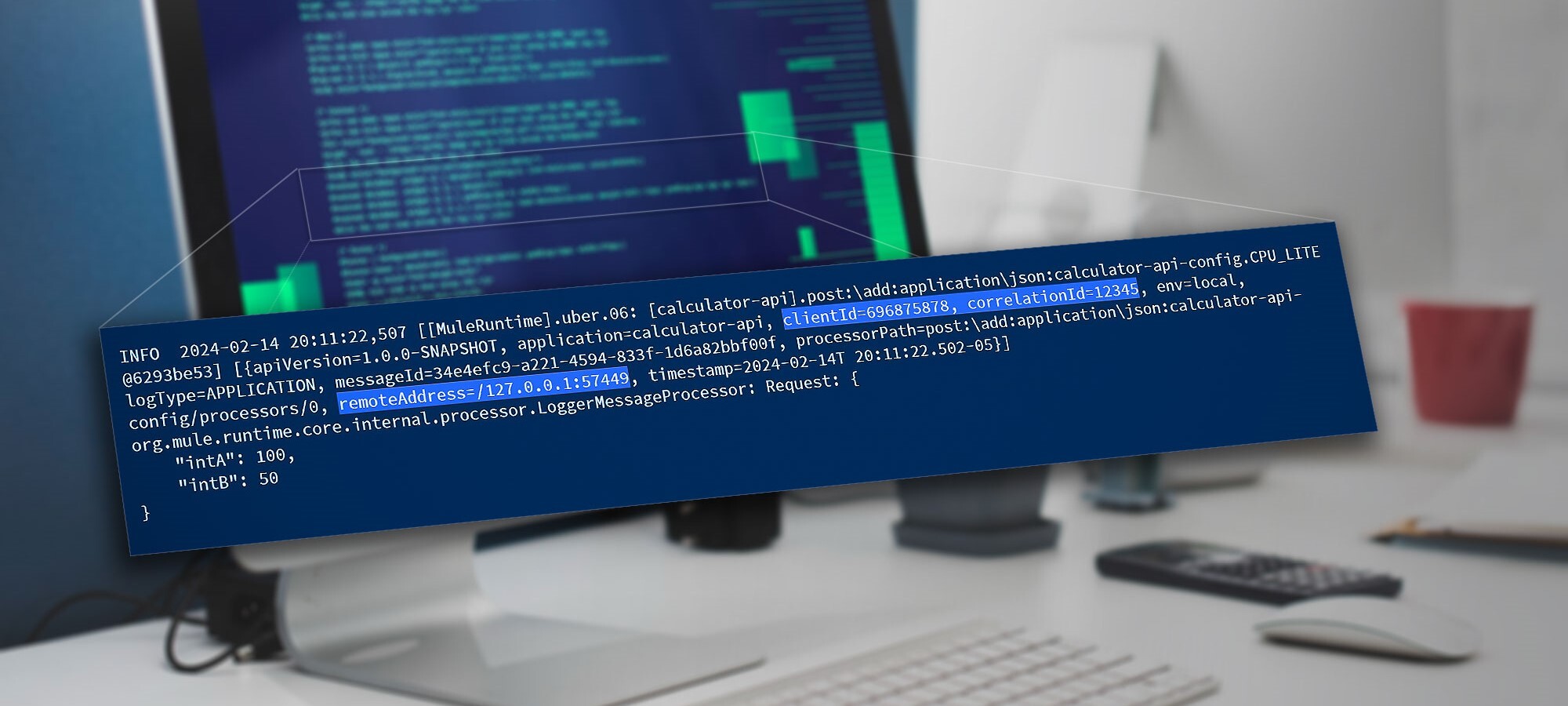
Good logging isn't about volume, it's about structure. The most effective logs capture information in key-value pairs, giving every entry a clear, machine-readable format. Instead of just long strings of text, each log line is prefixed with structured data that can be indexed, searched, and correlated across services.
When logs follow this pattern, modern log management tools can do the heavy lifting, indexing fields automatically and enabling powerful search filters. Need to find every error tied to a specific user, request, or service? A structured log makes it possible in seconds. Without this level of consistency, log analysis becomes manual and error-prone, slowing down operations when speed matters most.
Log Filtering
To make logs truly useful, they need to be designed for filtering. By including the right identifiers in every log entry, teams can quickly narrow down the search and focus on exactly what matters. Here are a few of the most common filters to build in:
Correlation ID
This allows operations to search the logs for a specific business process or transaction, by associating a unique identifier to every layer of the request for each application or API in the service call.
Message ID
This allows operations to drill in on a specific set of messages within the same application or API, allowing them to narrow their focus to a specific area of interest.
Client ID
This allows operations to track requests from a specific client. A client is a system, not a user that registers to use an API. During registration, the client receives a unique identifier, which makes it possible to monitor its traffic and usage patterns.
API Version
This allows operations to distinguish between versions that are running in parallel in production. By logging the version number, issues can be tied back to the correct release, making it clear whether an error is a new defect or one already fixed in the next version.
Log Masking
Designing for operations isn't just about what gets logged, it's also about what doesn't. APIs often process sensitive data such as account numbers, personal details, or credentials, and without proper safeguards this information can end up exposed in logs. That creates both a security risk and a compliance issue.
Log masking provides a controlled way to balance visibility with protection. Instead of writing sensitive values directly to logs, fields are masked or obfuscated, giving operations teams enough information to troubleshoot without exposing raw data. For example, an account number might be partially masked, showing only the last few digits to confirm context while hiding the rest.
When logging is designed as a first-class concern, not an afterthought, it transforms operational readiness. Teams gain the visibility they need to diagnose issues quickly, monitor system health proactively, and build confidence in their production environment.
This is the foundation of operational excellence: systems that are not just built to work, but built to be observed, understood, and supported at scale.